
Irresistible Hibachi Fried Rice Recipe
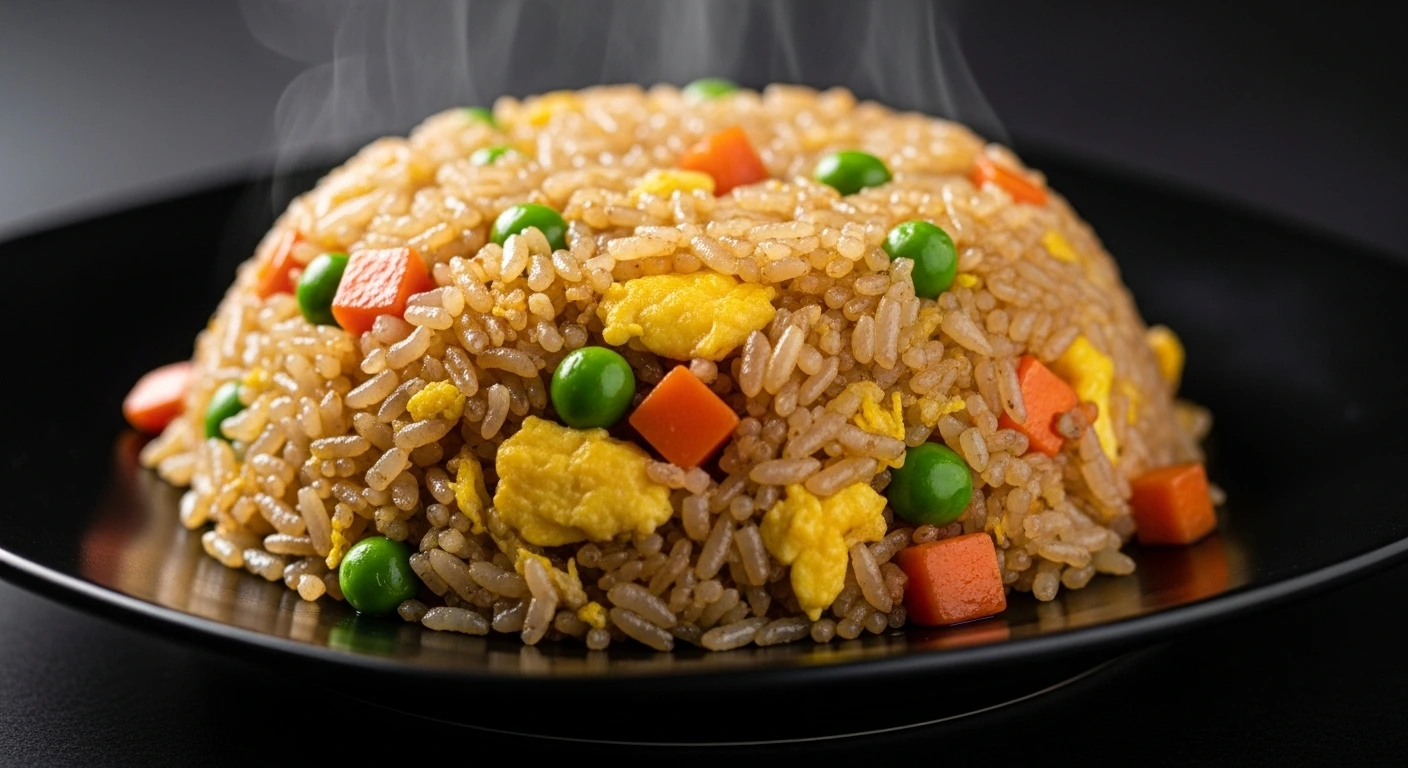
If you’ve ever sat at a Japanese steakhouse, watched the chef light up the grill, flip shrimp into his hat, and build that dramatic onion volcano, you know the real star of the show isn’t the tricks.
It’s the rice.
That buttery, garlicky, slightly smoky, deeply savory rice that somehow tastes better than any fried rice you’ve made at home. And today, we’re fixing that.
This hibachi fried rice recipe is everything you love about restaurant-style Japanese steakhouse rice — but made right in your own kitchen. No performance tricks required. Just bold flavor, simple ingredients, and a few smart techniques.
Ready? Let’s break it down step by step.
Table of Contents
What Is a Hibachi Fried Rice Recipe?
Before we jump into cooking, let’s clear something up. When most Americans say “hibachi,” they’re talking about that sizzling flat-top grill experience at places like Benihana.
But traditionally, Hibachi refers to a small charcoal heating device used in Japan. The style you see in restaurants is actually called Teppanyaki — cooking on a large iron griddle.
So technically, this is teppanyaki-style fried rice. But in the U.S., “hibachi fried rice recipe” is what people search for — and that’s exactly what we’re making.
What makes it different from regular fried rice?
- More butter
- More garlic
- Simpler seasoning
- High heat cooking
- A signature savory depth
It’s not overloaded with sauces. It’s not drowning in soy. It’s balanced. Clean. Bold. Like a perfectly tuned guitar — simple notes played just right.
Why You’ll Love This Hibachi Fried Rice Recipe
Let’s be honest. Some recipes look amazing but taste average. This isn’t one of them.
Here’s why this fried rice hibachi recipe works:
It’s fast.
You can make it in about 20 minutes if your rice is ready.
It’s budget-friendly.
A restaurant dinner for four can cost $80+. This version? A fraction of that.
It’s customizable.
Want chicken? Steak? Shrimp? Vegetarian? Done.
It tastes authentic.
We’re using the same flavor base found in Japanese steakhouses.
And here’s the best part — once you master this hibachi fried rice recipe, you’ll never look at takeout the same way again.
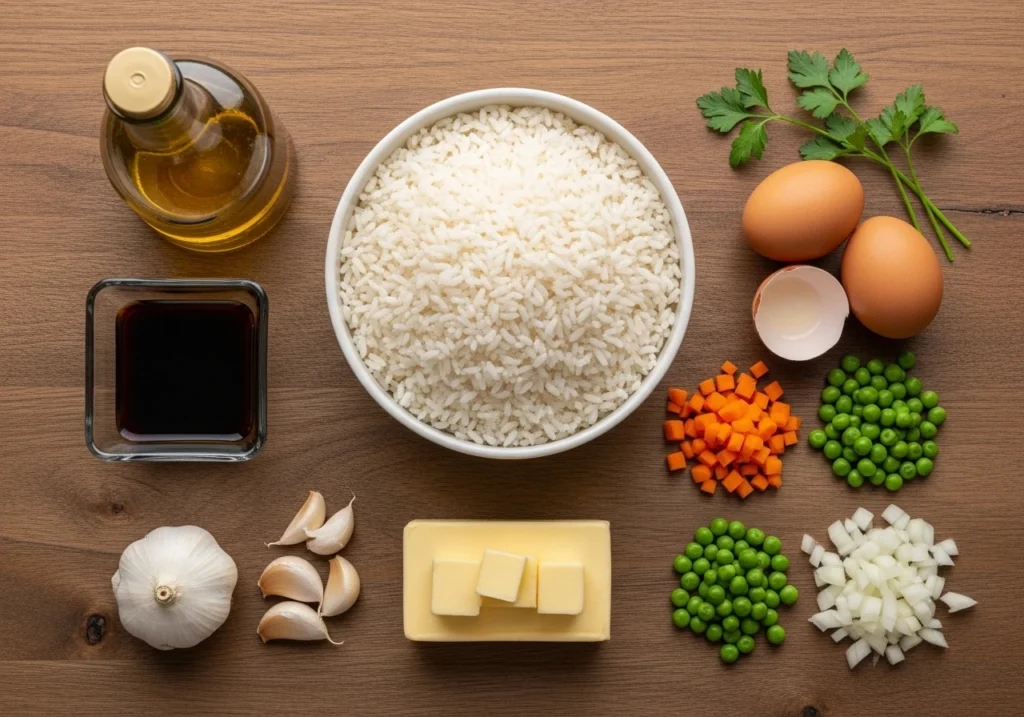
Ingredients for the Perfect Fried Rice Hibachi Recipe
The magic of hibachi rice is in its simplicity. No complicated sauces. No hidden chemicals. Just real ingredients used properly.
The Best Rice to Use
If there’s one rule you must follow, it’s this:
Use cold, day-old rice.
Fresh rice is too moist. It steams instead of fries. That’s how you get mushy fried rice — and nobody wants that.
The best option? Jasmine rice.
Why?
- It’s fragrant
- It stays fluffy
- The grains separate beautifully
Cook it the day before. Spread it on a tray. Refrigerate uncovered if possible. Let it dry slightly. That’s how you get that restaurant texture.
Essential Flavor Boosters
Now let’s talk seasoning.
The flavor backbone of this hibachi fried rice recipe includes:
- Soy sauce
- Sesame oil
- Butter
- Garlic
Notice something? There’s no complicated sauce mix.
The soy gives salt and umami. The sesame oil adds nuttiness. The butter makes it rich. The garlic makes it irresistible.
It’s like building a house. You don’t need 50 materials. You just need the right foundation.
Eggs and Vegetables
Classic hibachi rice includes:
- Scrambled eggs
- Finely chopped onion
- Carrots
- Green peas
The vegetables are diced small so they cook fast and blend seamlessly into the rice.
You don’t want chunky vegetables overpowering the dish. This isn’t stir-fry. It’s rice first, everything else supporting.
Kitchen Tools You Need for a Hibachi Fried Rice Recipe Blackstone Style
Now let’s talk equipment.
Can you make this in a regular pan? Yes.
But if you own a flat-top grill like a Blackstone, you’re in for a treat. A hibachi fried rice recipe Blackstone version gives you better heat distribution and that slightly smoky edge.
Here’s what works best:
Option 1: Flat Top Grill (Best Result)
High heat. Large surface area. Real steakhouse vibes.
Option 2: Wok
Great for heat concentration. Tossing is easier.
Option 3: Cast Iron Skillet
Heavy, retains heat well, excellent alternative.
The key isn’t the tool.
It’s the heat.
Hibachi-style rice needs high heat to fry, not steam. If your pan isn’t hot enough, you’re sautéing — not recreating steakhouse flavor.
How to Make Hibachi Fried Rice Recipe Step by Step
Let’s cook.
Step 1: Preheat Everything
Heat your skillet or flat top over medium-high to high heat. Let it get properly hot before adding anything.
Add oil — neutral oil works best.
Step 2: Cook the Eggs First
Crack the eggs directly onto the hot surface. Scramble quickly. Don’t overcook.
Once set, remove and set aside.
Why cook eggs separately?
Because overcooked eggs turn rubbery when reheated with rice.
Step 3: Sauté Aromatics
Add butter.
Then add finely diced onion and carrots.
Cook until slightly softened. Not mushy. You want slight texture.
Add minced garlic and cook briefly — about 30 seconds. Garlic burns fast, so stay alert.
Step 4: Add the Rice
Now the star enters the stage.
Break up the cold rice with your hands before adding it. No clumps.
Spread it out on the hot surface. Let it sit for a minute before stirring. That slight contact time creates light toasting.
Stir. Flip. Toss.
Keep the rice moving but don’t overwork it.
Step 5: Season
Drizzle soy sauce lightly — don’t flood it.
Add a splash of sesame oil.
Return the eggs.
Mix everything thoroughly.
Taste. Adjust salt if needed.
That’s it.
Simple. Controlled. Powerful.
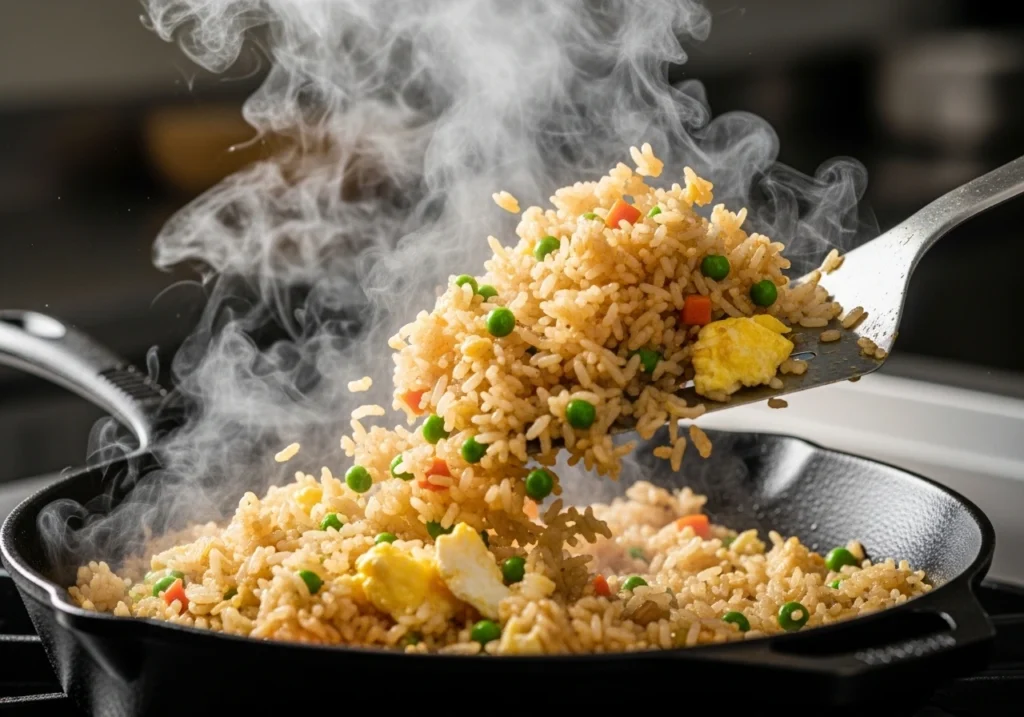
How to Make Hibachi Chicken Fried Rice Recipe
Want protein? Let’s elevate this to a full hibachi chicken fried rice recipe.
Best Chicken Cuts
Use boneless, skinless chicken thighs for maximum flavor. Chicken breast works too, but thighs stay juicier.
Dice small. Steakhouse style.
Cooking Order
Cook the chicken first in oil with salt and pepper. Remove once cooked through.
Then follow the same rice steps as above.
Add chicken back in during the final mixing stage.
That’s how restaurants do it.
Pairing It Right
Want that full steakhouse experience?
Serve with Yum Yum Sauce on the side.
Creamy. Slightly sweet. Tangy. It complements the savory rice perfectly.
Restaurant Comparison: Homemade vs Steakhouse
Let’s be honest.
Restaurants like Benihana and Kobe Japanese Steakhouse have mastered presentation and consistency.
But here’s the secret: the flavor profile is not complicated.
At home, you actually control:
- Salt level
- Butter richness
- Portion size
- Protein quality
And you save money.
Once you master this fried rice recipe hibachi style, you’ll realize you don’t need the flashing knives to recreate the taste.
Expert Tips to Elevate Your Hibachi Fried Rice Recipe
You’ve got the basics down. But if you really want your hibachi fried rice recipe to taste like it came off a sizzling steakhouse grill, this is where the magic happens.
Small details. Big difference.
Why Day-Old Rice Is Non-Negotiable
Let’s revisit this because it matters that much.
Fresh rice contains surface moisture. When it hits a hot pan, it releases steam. Steam is the enemy of fried rice. It turns everything soft and sticky.
Day-old rice? It’s dry. Firm. Ready to fry.
Think of it like trying to toast fresh bread versus slightly stale bread. The slightly stale bread crisps better. Same logic.
If you forgot to cook rice the night before, here’s a quick fix: spread freshly cooked rice on a baking sheet and refrigerate uncovered for at least 1–2 hours. It’s not perfect, but it works.
The Butter + Soy Sauce Balance
Here’s where many home cooks go wrong.
Too much soy sauce and your fried rice recipe hibachi style becomes dark, salty, and heavy.
Too little butter and you lose that signature steakhouse richness.
The goal is balance.
Use soy sauce to season — not to color the rice. And let butter provide the depth. Restaurants often use more butter than you think. That’s part of why it tastes so good.
Achieving the “Wok Hei” Effect
You’ve probably heard chefs talk about “wok hei.” It’s that subtle smoky flavor that tastes like fire kissed the food.
Even without a wok, you can mimic it:
- Use very high heat
- Don’t overcrowd the pan
- Let rice sit briefly before stirring
- Use a heavy pan that retains heat
On a flat top grill, this is even easier. The larger surface allows better contact with heat.
Advanced Hibachi Fried Rice Recipe Blackstone Method
If you own a flat-top grill, this section is for you.
A hibachi fried rice recipe Blackstone version feels closer to the real steakhouse experience because you’re cooking on a wide, open surface — just like teppanyaki chefs do.
Preheat Properly
Don’t rush this step. Let the surface heat thoroughly. Medium-high to high heat is ideal.
A properly heated flat top should sizzle immediately when oil hits it.
Zone Cooking
Create heat zones:
- One side for protein
- One side for vegetables
- Center for rice
This prevents overcrowding and keeps everything frying instead of steaming.
Layering Flavors
Cook protein first. Remove it.
Cook vegetables in butter.
Add rice and let it toast slightly before mixing.
Drizzle soy sauce around the edges so it hits the hot surface first — this slightly caramelizes it before it blends into the rice.
That small trick makes a huge difference.
Delicious Variations of This Hibachi Fried Rice Recipe
One of the reasons this hibachi fried rice recipe ranks high in popularity is its flexibility. Once you understand the base, you can build endless variations.
Steak Hibachi Fried Rice
Use sirloin or ribeye cut into small cubes.
Season simply with salt and pepper.
Cook quickly over high heat. Remove when medium-rare to medium. It will finish cooking when mixed back into the rice.
The beef juices blend into the rice, creating an even richer flavor.
Shrimp Version
Shrimp cook fast — about 2–3 minutes total.
Season lightly, cook until pink, remove, and fold back in at the end.
Shrimp adds sweetness that pairs beautifully with garlic butter.
Vegetarian Option
Skip the meat and increase vegetables.
Add:
- Mushrooms
- Zucchini
- Extra peas
- Bean sprouts
The butter and soy base still carries the flavor. You won’t miss the protein.
Low-Carb Alternative
Want a lighter option?
Use cauliflower rice.
Cook it over high heat to remove moisture before seasoning. Keep in mind the texture will differ, but the flavor profile stays familiar.
Serving Suggestions for Your Hibachi Fried Rice Recipe
Presentation matters. Even at home.
You don’t need knife tricks or flaming onion volcanoes, but you can still make it feel special.
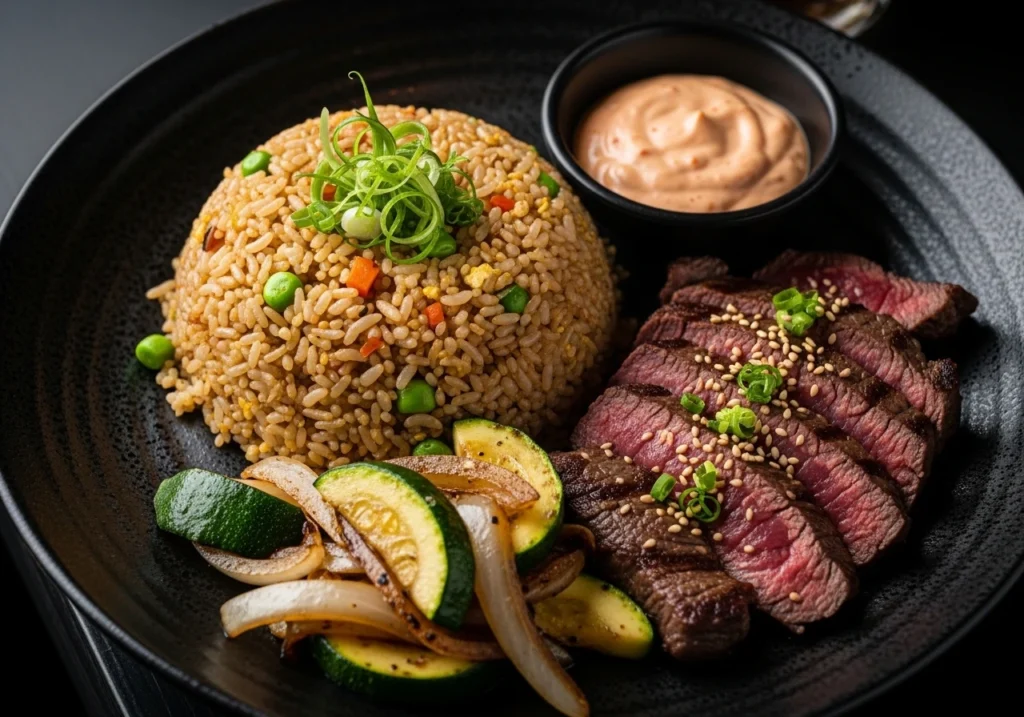
Serve with Hibachi Vegetables
Sauté zucchini, mushrooms, and onions in butter and soy sauce. Keep them slightly crisp.
They pair perfectly with this fried rice hibachi recipe.
Add a Sauce on the Side
A small bowl of Yum Yum Sauce elevates everything.
Drizzle lightly. Don’t drown the rice.
Build a Steakhouse Plate
Plate rice in the center.
Protein on one side.
Vegetables on the other.
Simple. Clean. Balanced.
You’ve just recreated a Japanese steakhouse dinner in your kitchen.
Storage, Reheating, and Meal Prep Tips
Let’s talk practicality.
One of the best things about this hibachi chicken fried rice recipe or classic version is that it stores beautifully.
How to Store
Allow rice to cool completely.
Store in an airtight container in the refrigerator for up to 4 days.
How to Reheat Without Drying Out
The microwave works, but add a splash of water and cover loosely to create steam.
Better option?
Reheat in a skillet with a small amount of butter. This brings back that fresh-off-the-grill taste.
Freezing Option
Yes, you can freeze it.
Store in freezer-safe containers for up to 2 months.
Thaw overnight in the refrigerator before reheating.
Frequently Asked Questions About Hibachi Fried Rice Recipe
Can I Use Fresh Rice?
Technically yes. But texture suffers.
Day-old rice gives you that separated grain effect that defines a proper hibachi fried rice recipe.
What Makes It Taste Like Restaurant Rice?
High heat. Butter. Balanced soy sauce. Proper rice texture.
That’s it. No secret powders. No complicated sauces.
Is This the Same as a Fried Rice Recipe Hibachi Style?
Yes. Whether someone searches “fried rice recipe hibachi” or “hibachi fried rice recipe,” they’re looking for that Japanese steakhouse flavor profile.
Can I Make This Without a Blackstone?
Absolutely.
A cast iron skillet works great. Just make sure it’s hot enough before adding rice.
Final Thoughts on This Irresistible Hibachi Fried Rice Recipe
At its core, this dish proves something simple: great food doesn’t have to be complicated.
This hibachi fried rice recipe works because it focuses on fundamentals:
- Proper rice texture
- High heat cooking
- Balanced seasoning
- Simple, quality ingredients
Once you make it once, you’ll see how repeatable it is.
And here’s the best part — it becomes your base. Your canvas. Your blank slate.
Want to turn it into a hibachi chicken fried rice recipe? Easy.
Want to try the hibachi fried rice recipe Blackstone method for a backyard dinner? Even better.
You’re no longer guessing how restaurants do it. You understand the structure. The rhythm. The flavor balance.
Cooking is like music. When you know the core notes, you can improvise confidently.
And now you have those notes.
More soup recipes you’ll love
Japanese Fried Rice (Hibachi Style)
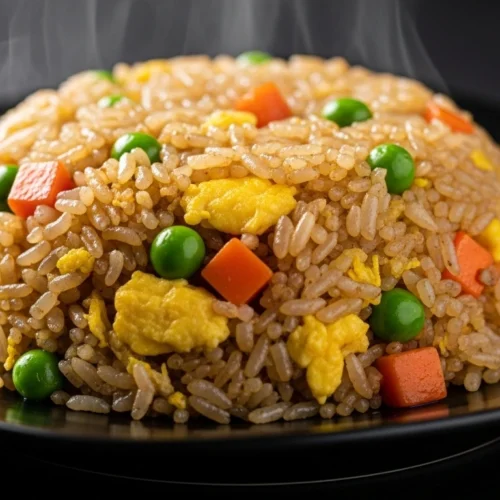
Irresistible Hibachi Fried Rice Recipe
Ingredients
For the Base Hibachi Fried Rice
- 4 cups cooked day-old jasmine rice cold
- 2 tablespoons neutral oil vegetable or avocado oil
- 3 tablespoons butter
- 3 cloves garlic minced
- ½ cup diced onion
- ½ cup diced carrots
- ½ cup frozen peas
- 2 large eggs
- 3 tablespoons soy sauce adjust to taste
- 1 teaspoon sesame oil
- Salt and black pepper to taste
Optional Protein Add-In (Choose One)
- 1½ cups diced chicken thighs for hibachi chicken fried rice recipe
- 1½ cups diced sirloin steak
- 1½ cups peeled shrimp
Instructions
Step 1: Prepare the Rice
- Use cold, day-old jasmine rice. Break apart clumps with your hands before cooking.
Step 2: Cook the Eggs
- Heat 1 tablespoon oil in a large skillet over medium-high heat. Scramble eggs quickly until just set. Remove and set aside.
Step 3: Sauté Vegetables
- Add remaining oil and butter to the pan. Add diced onion and carrots. Cook 2–3 minutes until slightly softened. Stir in garlic and cook 30 seconds.
Step 4: Add the Rice
- Add cold rice and spread evenly across the pan. Let sit for 1 minute to lightly toast, then stir and toss.
Step 5: Season
- Drizzle soy sauce evenly over the rice. Add sesame oil. Stir well to combine.
Step 6: Return Eggs
- Add scrambled eggs and peas back to the pan. Toss until evenly distributed.
Step 7: Add Protein (Optional)
- If making hibachi chicken fried rice recipe or other variation, cook protein separately first, remove, then mix back in during final step.
Step 8: Adjust and Serve
- Taste and adjust seasoning with salt or additional soy sauce. Serve hot.
Notes
- Day-old rice is essential for proper texture.
- Do not overcrowd the pan.
- Use high heat for authentic Japanese steakhouse flavor.
- Soy sauce should season lightly, not overpower.
- Butter is key for restaurant-style richness.
Review Our Recipe: Your Feedback Makes a Difference
There are no reviews yet. Be the first one to write one.