
The Best Chicken Tikka Masala Recipe Ever
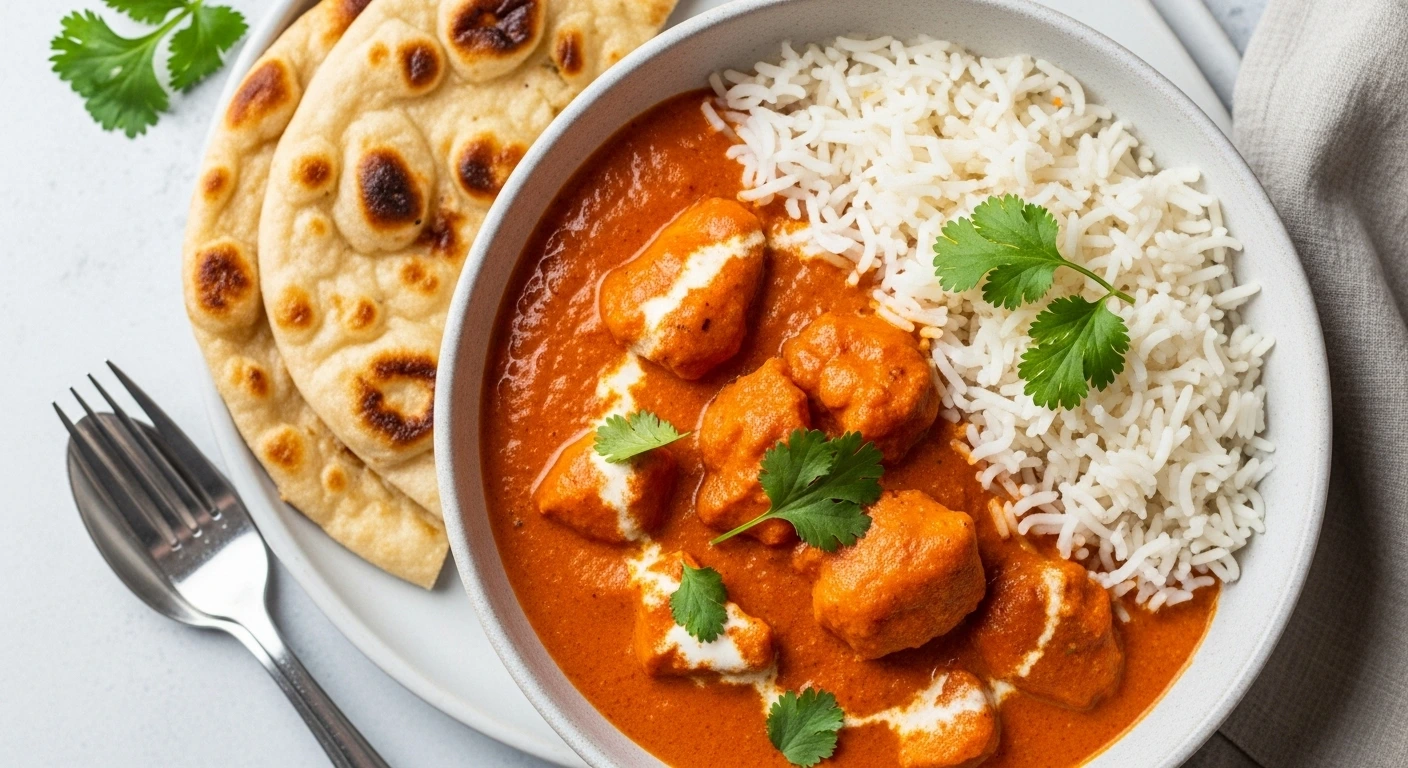
If you’ve ever ordered Indian food and felt that little thrill when the delivery arrives — the steam fogging the lid, the sauce glistening like a promise — then you know why chicken tikka masala is a culinary love story. This recipe brings that restaurant-quality magic to your own kitchen with straightforward steps, everyday ingredients, and a result that sings: smoky, tangy, creamy, and intensely comforting. In this first part I’ll walk you through what makes this chicken tikka masala recipe special, how it differs from its cousin butter chicken, why you’ll fall in love with this version, and I’ll list the exact ingredients and tools you’ll need (organized in handy tables so you can shop and prep quickly).
Table of Contents
What Makes This Chicken Tikka Masala Recipe So Special?
Chicken tikka masala is one of those dishes that wears many hats. It’s bright and citrusy from a yogurt marinade, smoky from a quick sear or grill, and saucy and luxurious once it’s simmered with tomatoes and cream. But beyond its layers of flavor, what makes this chicken tikka masala recipe stand out is balance — not too spicy, not too heavy, and just enough tang to cut through the cream. If you like bold flavors without fuss, you’re in the right place.
Why is this dish so popular across the globe? For starters, it marries familiar elements: grilled chicken (something most home cooks are comfortable with) and a rich tomato-based sauce that’s easy to tweak. It’s also forgiving: substitutions for dairy or heat level are simple, and it scales from weeknight dinners to impressive date-night plates.
You might hear the term “chicken masala chicken” floating around in searches and recipes — that phrasing often points to variations where chicken is cooked in a spiced masala base without the distinct tikka-style marination and searing. In short, tikka masala emphasizes marinated, grilled pieces soaked in a cream- and tomato-forward sauce; “chicken masala chicken” can be broader and less specific. We’ll keep the focus on the classic technique here: marinate, sear, and simmer.
Chicken Tikka Masala vs Butter Chicken — What’s the Difference?
If you’re wondering about the debate framed as “butter chicken vs tikka masala” — you’re not alone. Many people type searches like “butter chicken vs chicken tikka masala” or “chicken tikka masala vs butter chicken” trying to understand which is which. Here’s an easy way to tell them apart:
- Origins & Intent: Butter chicken (murgh makhani) originates from Delhi and was invented to use leftover tandoori chicken in a buttery tomato sauce. Chicken tikka masala likely evolved in the UK, adapting Indian flavors for a grilled–then-sauced dish. The lineage is complex, but the important part for cooks is their personalities: butter chicken leans peppery-sweet and silky; tikka masala leans smoky, spiced, and tangy.
- Marinade & Protein Treatment: Tikka uses a yogurt-based marinade with spices and often gets a quick high-heat sear or grill to create charred edges. Butter chicken may use tandoori-style chicken too, but sometimes it’s cooked more gently and finished in the butter-heavy sauce. This is why many people prefer tikka masala when they want that “grilled” flavor.
- Sauce Composition: Both sauces use tomatoes and cream, but tikka masala tends to have a more complex spice profile (including a noticeable garam masala finish), while butter chicken emphasizes butter, cream, and sometimes fenugreek (kasuri methi) for sweetness.
- Heat & Acidity: Tikka masala often includes more acidity (from yogurt in the marinade or lemon) which brightens the dish. Butter chicken typically plays softer, emphasizing richness.
So when you see “butter chicken vs tikka masala” in a search, know that the line is softer than you might expect. This recipe is firmly on the tikka masala side: a yogurt marinade, quick char, and a vibrant tomato-cream masala.
Why You’ll Love This Chicken Tikka Masala Recipe
Let’s keep it real: what matters is the final bite. Here’s what you get from this version:
- Balanced heat and creaminess. It’s spicy enough to be interesting but mellowed by cream for that silky mouthfeel. You choose the heat level.
- Smoky, grilled notes without a grill. A hot skillet or broiler gives you those charred edges if you don’t have a tandoor.
- Flexible ingredients. Prefer thighs over breasts? Go for it. Need dairy-free? Swap cream for full-fat coconut milk and yogurt for plant-based yogurt.
- Simple technique. Marinate, sear, sauce, simmer — each step is manageable and forgiving.
This recipe scales, freezes well, and makes stellar leftovers. Serve it with basmati rice or warm naan bread, and you’ve got a crowd-pleasing meal that beats takeout both in taste and price-per-serving.
Ingredients You’ll Need for the Best Chicken Tikka Masala
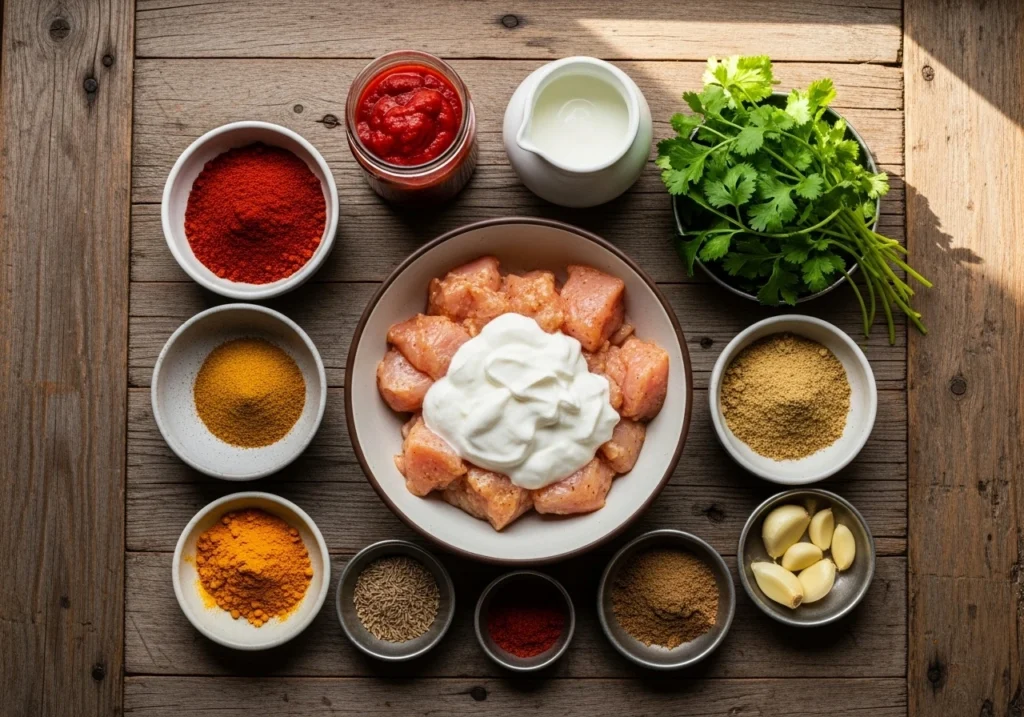
Below is a clear, organized ingredient table you can copy for shopping. Measurements are for roughly 4 servings.
| Ingredient | Amount | Notes / Substitutions |
|---|---|---|
| Chicken (breast or thighs), boneless, skinless | 800 g (about 1.7 lb) | Thighs = juicier; breasts = leaner |
| Plain yogurt | 200 g (about 3/4 cup) | Use full-fat for richness; dairy-free yogurt works |
| Lemon juice | 2 tbsp | Brightens marinade |
| Garlic, minced | 2 tbsp | Or 2 tsp garlic paste |
| Ginger, grated | 2 tbsp | Or 2 tsp ginger paste |
| Garam masala | 2 tsp | Key entity for authentic flavor |
| Ground cumin | 1 tsp | |
| Ground coriander | 1 tsp | |
| Turmeric | 1/2 tsp | For color and warmth |
| Cayenne pepper / chili powder | 1/2–1 tsp | Adjust heat to taste |
| Salt | 1–1.5 tsp | To taste |
| Vegetable oil or ghee | 3 tbsp | Ghee adds richer flavor |
| Unsalted butter | 2 tbsp | Optional — for more buttery notes |
| Onion, finely chopped | 1 large | Yellow or white |
| Tomato puree or crushed tomatoes | 400 g (about 1 can) | Fresh tomatoes cooked down work too |
| Heavy cream | 150 ml (about 2/3 cup) | Substitute coconut milk for dairy-free |
| Kasuri methi (dried fenugreek leaves) | 1 tsp | Optional but classic |
| Fresh cilantro (coriander), chopped | 2 tbsp | For garnish |
| Basmati rice or naan | As needed | For serving |
In searches you may encounter phrases like “chicken tikka masala ingredients” frequently; that’s because the right blend of spices is what separates a good curry from a great one. Don’t skip the garam masala — it’s an essential entity here.
Kitchen Tools You’ll Need
A recipe is only as smooth as your mise en place. Here’s a compact table of tools.
| Tool | Purpose |
|---|---|
| Heavy skillet or cast-iron pan | For searing chicken to get charred edges |
| Mixing bowls | For marinade and sauce prep |
| Measuring spoons & cups | For consistency |
| Wooden spoon or spatula | For stirring sauce |
| Knife and cutting board | Prep work |
| Blender or immersion blender (optional) | To smooth sauce if desired |
| Lid for pan | For simmering |
You’ll see “skillet or pan” listed in many guides — that’s because method matters more than gadgetry. If you have a broiler or grill, you can char the chicken there; otherwise a smoking-hot pan does the trick.
Step-by-Step Guide — Start: Marinate & Prep (beginning of the cooking sequence)
Now we begin the cooking process. Below I’ll take you through the critical early steps that set the flavor foundation: marinating and searing. These are the steps where most cooks win or lose — get them right and the rest falls into place.
Step 1 — Make the Yogurt Marinade
Marinade is where the flavors penetrate the meat and where tenderness comes from. Mix the yogurt, lemon juice, garlic, ginger, garam masala, cumin, coriander, turmeric, cayenne (or chili powder), and salt in a bowl until smooth. Taste a tiny dab on a finger — it should be lively: tangy, spicy, with that warm garam masala aroma.
Add the cubed chicken pieces to the marinade and toss well so every piece is coated. How long should you marinate? Ideally at least 1 hour, and up to overnight. If you’re short on time, 20–30 minutes will still add flavor, but longer is better for tenderness and depth. The yogurt’s acidity helps break down proteins, giving you the tender bites associated with grilled chicken tikka.
Step 2 — Sear or Grill the Marinated Chicken
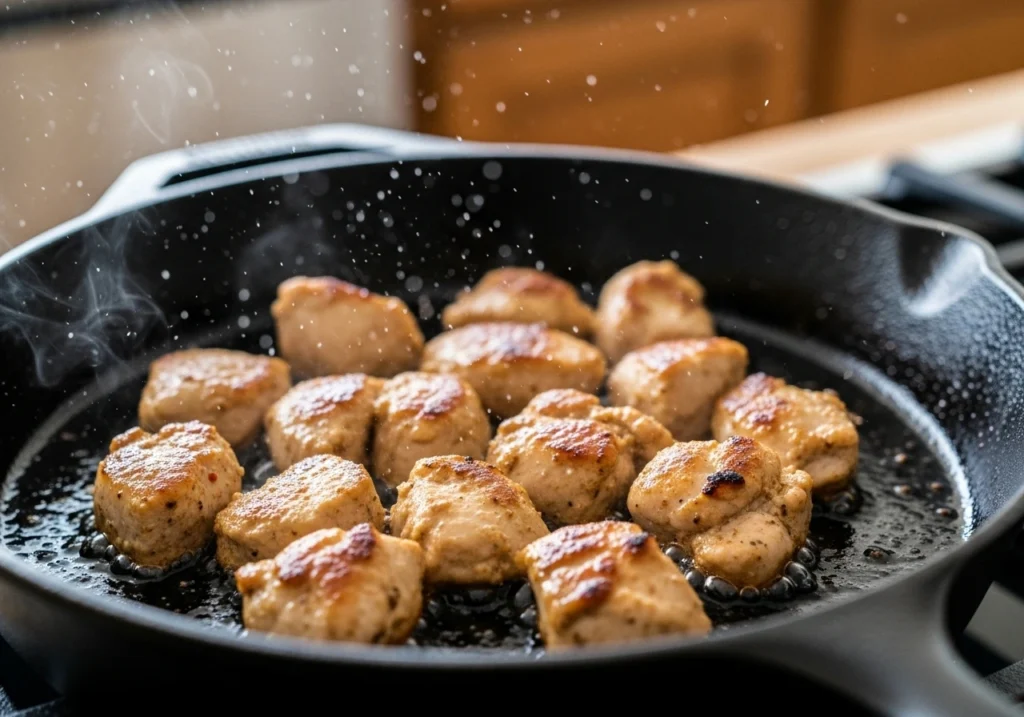
Heat your skillet over medium-high to high heat until it’s very hot. Add a splash of oil. Shake off excess marinade from the chicken before placing pieces in the pan — you want contact and sear, not steaming.
Place pieces with space between them; overcrowding cools the pan and prevents charring. Cook in batches if necessary. Sear for 2–3 minutes per side until you get golden-brown, charred edges. You’re aiming for smoky flavor, not full doneness — the chicken will finish cooking in the sauce later. If you have a grill or broiler, a minute or two under high heat will give an even better char reminiscent of restaurant “tikka.”
Tip: If some pieces stick, let them go — after a proper sear they’ll release cleanly. Avoid constantly turning; each flip interrupts caramelization.
After you’ve seared the marinated chicken and set it aside, your kitchen already smells incredible — smoky, spicy, and just a little tangy. Now it’s time to build that signature sauce that makes this chicken tikka masala recipe unforgettable. This part is all about patience, layering, and balance.
Step 3 — Build the Base of Flavor
In the same skillet you used for searing, lower the heat to medium. Don’t wash it — those browned bits stuck at the bottom are gold. Add a tablespoon of butter or ghee. Once melted, toss in the chopped onions. Stir often, scraping the pan as you go.
You want the onions to soften and caramelize slightly — this takes about 8 to 10 minutes. The onions form the backbone of your masala. Add minced garlic and grated ginger, and stir until fragrant (about 1 minute).
At this stage, the aroma becomes complex — earthy, sweet, and spicy. Sprinkle in ground cumin, coriander, and a pinch more garam masala. Let the spices bloom for 30 seconds in the fat. This brief toasting wakes them up and gives your sauce a deeper, nuttier tone.
Step 4 — Add Tomatoes and Simmer
Pour in the tomato puree or crushed tomatoes. Stir and let the mixture simmer gently. You’ll notice it thickening and darkening in color — that’s the sign of proper reduction. This is your masala base.
If you prefer a smooth texture, you can use an immersion blender right in the pan to puree the mixture. Otherwise, keep it chunky for a more rustic style.
Let this cook for 10 minutes. Taste it halfway — if it’s too acidic, a small pinch of sugar balances it.
Step 5 — Create the Creamy Finish
Once your tomato mixture is rich and fragrant, lower the heat and slowly pour in the heavy cream. Stir continuously to blend everything into a velvety, orange-red sauce. Watch how it transforms from sharp and tangy to luxurious and mellow.
At this point, sprinkle in dried fenugreek (kasuri methi). This is optional, but if you can find it, don’t skip it — it gives tikka masala its distinctive restaurant flavor.
Slide your seared chicken pieces back into the sauce, along with any juices that have collected in the bowl. Stir to coat the chicken evenly, then cover and simmer for about 10 to 15 minutes. This final cooking time helps the flavors marry — the chicken absorbs the sauce, and the sauce thickens to that iconic creamy consistency.
Taste and adjust. Want more spice? Add a pinch of chili powder. Need a touch more warmth? Sprinkle a little extra garam masala. This is your dish — tailor it to your taste.
Pro Tips for the Perfect Chicken Tikka Masala
A great homemade chicken tikka masala isn’t about fancy equipment; it’s about technique and intuition. Here are my tried-and-true secrets:
1. Balance Your Spices
Think of your spice blend like a musical chord. Garam masala brings warmth, cumin adds earthiness, coriander lifts it with citrusy notes, and turmeric provides color. Resist the temptation to add too much chili powder right away — you can always increase heat at the end, but you can’t take it out once it’s in.
2. Yogurt is the Secret Weapon
The yogurt in the marinade doesn’t just add flavor — it tenderizes the chicken beautifully. The lactic acid gently breaks down the proteins, creating melt-in-your-mouth texture.
3. Sear, Don’t Boil
When you sear the marinated chicken, make sure your pan is hot. You’re not cooking it through at this stage — just getting those flavorful brown bits that add depth to your sauce later.
4. Cream Alternatives
If you’re dairy-free, coconut milk is a great substitute for heavy cream. It adds richness without overpowering the spices. Just use full-fat coconut milk for the best texture.
5. Let It Rest
Like most curries, chicken tikka masala tastes even better after a short rest. If you can, let it sit covered for 10–15 minutes before serving. The sauce thickens slightly and the flavors blend harmoniously.
Serving Ideas and Pairings
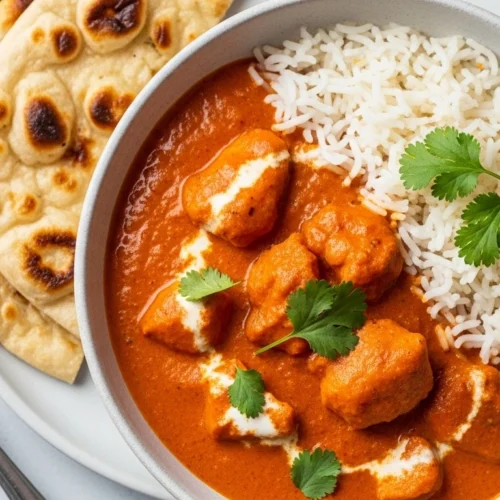
Presentation matters almost as much as taste. When you bring this dish to the table, that vibrant reddish-orange hue should instantly catch the eye. Here are some great serving ideas:
Serve With the Classics
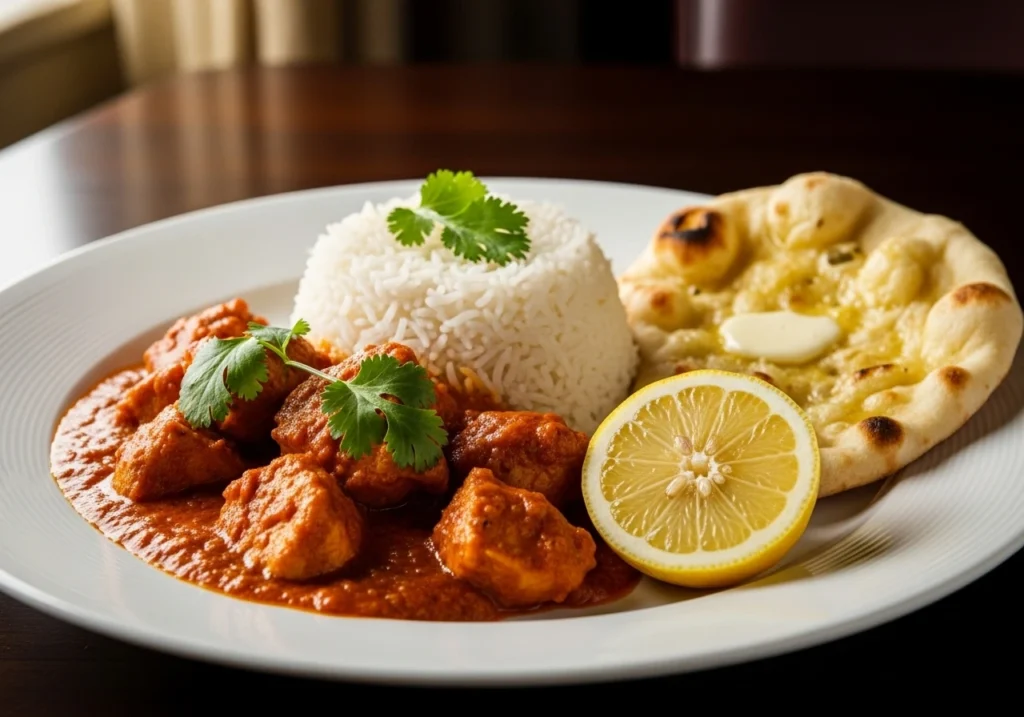
- Basmati Rice: The light, fluffy grains are perfect for soaking up every drop of that creamy sauce.
- Naan Bread: Soft and slightly charred naan acts like an edible sponge for the tikka masala sauce.
- Cucumber Raita: This cooling yogurt-based side dish balances the spice.
Add Freshness
A sprinkle of chopped cilantro or a squeeze of lemon just before serving brightens the dish. For an extra pop, you can add a few slices of red onion or chili on top.
Perfect Drink Pairings
Pairing drinks with spicy dishes is about contrast. Try sweetened iced tea, mango lassi, or a light sparkling water with lime. They cool your palate and highlight the masala’s warmth.
Storage and Reheating Tips
One of the best parts of this chicken tikka masala recipe is how well it keeps. The flavors actually deepen overnight, making it ideal for meal prep.
- Storage: Let the curry cool completely before transferring it to an airtight container. Refrigerate for up to 4 days.
- Freezing: Chicken tikka masala freezes beautifully. Divide into portions, freeze up to 3 months, and thaw overnight in the fridge.
- Reheating: Warm it gently on the stove over low heat. If the sauce thickens too much, add a splash of cream, milk, or water to loosen it. Avoid microwaving at high power — it can dry the chicken.
Frequently Asked Questions
Can I make this chicken tikka masala recipe with coconut milk?
Absolutely. Coconut milk adds a subtle sweetness and silky texture. It’s also an excellent option for lactose-intolerant or dairy-free diets.
Is chicken tikka masala spicy?
It can be, but it doesn’t have to be. You control the spice by adjusting the amount of chili powder or cayenne. For a mild version, use less; for extra heat, sprinkle a bit more before serving.
What’s the best substitute for garam masala?
If you can’t find garam masala, mix equal parts ground cumin, coriander, and allspice with a pinch of cinnamon and black pepper. It won’t be identical, but it’ll come close.
How is chicken masala chicken different from tikka masala?
Chicken masala chicken refers broadly to chicken cooked with a spiced masala (sauce) — but not necessarily marinated or grilled first. Chicken tikka masala, by contrast, uses marinated grilled chicken pieces simmered in a creamy tomato-based sauce.
Final Thoughts — Why This Is the Best Chicken Tikka Masala Recipe Ever
This recipe brings everything together — the smokiness of the seared chicken, the richness of the creamy sauce, and the perfect balance of spice and tang. It’s a dish that feels indulgent yet achievable.
Cooking at home means you control every detail — the spice level, the creaminess, the portion size — all without compromising on taste. Whether you’re new to Indian cooking or you’ve made curries before, this authentic chicken tikka masala recipe will surprise you with how easy and satisfying it is.
Serve it on a cozy night in, impress guests at a dinner party, or prep it ahead for busy weeknights. Either way, one bite and you’ll understand why this dish has become a global comfort food icon.
So go ahead — light up that skillet, stir in the cream, and make your kitchen smell like your favorite Indian restaurant. The best part? You’ll have made it yourself, one step at a time.
The Best Chicken Tikka Masala Recipe Ever
Ingredients
- 800 g 1.7 lb boneless, skinless chicken thighs or breasts (thighs for juiciness, breasts for a leaner texture)
- ¾ cup 200 g plain yogurt (full-fat preferred)
- 2 tablespoons lemon juice
- 2 tablespoons minced garlic fresh or paste
- 2 tablespoons grated fresh ginger
- 2 teaspoons garam masala
- 1 teaspoon ground cumin
- 1 teaspoon ground coriander
- ½ teaspoon turmeric
- ½ to 1 teaspoon chili powder or cayenne pepper adjust to your spice preference
- 1 to 1½ teaspoons salt to taste
- 3 tablespoons oil or ghee ghee adds extra richness
- 2 tablespoons unsalted butter
- 1 large onion finely chopped
- 400 g 1 can tomato puree or crushed tomatoes
- ⅔ cup 150 ml heavy cream (or coconut milk for a dairy-free version)
- 1 teaspoon kasuri methi dried fenugreek leaves, optional but recommended for authentic flavor
- 2 tablespoons chopped fresh cilantro for garnish
- Basmati rice or warm naan bread for serving
Instructions
Prepare the Marinade:
- In a bowl, combine yogurt, lemon juice, garlic, ginger, garam masala, cumin, coriander, turmeric, chili, and salt. Add chicken pieces and coat well. Marinate for at least 1 hour or overnight for best results.
Sear the Chicken:
- Heat oil or ghee in a skillet over medium-high heat. Shake excess marinade off chicken and sear until golden brown and slightly charred on both sides (2–3 minutes per side). Remove and set aside.
Make the Masala Base:
- In the same pan, melt butter and add chopped onions. Cook until soft and golden. Stir in garlic, ginger, and remaining spices (cumin, coriander, garam masala). Toast for 30 seconds.
Add Tomatoes:
- Pour in tomato puree or crushed tomatoes. Stir and simmer for 10 minutes until thickened and deep in color. Blend if you prefer a smooth sauce.
Add Cream and Fenugreek:
- Lower heat, stir in heavy cream and kasuri methi. Mix until creamy and well combined.
Combine Chicken and Sauce:
- Add seared chicken back into the pan. Simmer for 10–15 minutes until chicken is fully cooked and tender. Adjust seasoning to taste.
Garnish and Serve:
- Sprinkle chopped cilantro on top and serve hot with basmati rice or warm naan.
Notes
- Dairy-Free Option: Substitute yogurt and cream with coconut alternatives.
- Make It Spicier: Add a pinch more chili powder or crushed red pepper flakes.
- For Richer Flavor: Use ghee instead of oil.
- Storage: Refrigerate for up to 4 days or freeze for up to 3 months.
Review Our Recipe: Your Feedback Makes a Difference
There are no reviews yet. Be the first one to write one.