
The Best Lemon Scones Recipe for Stunning, Zesty Flavor

Table of Contents
Introduction to the Best Lemon Scones Recipe
There’s something about a warm scone that feels like a small, domestic miracle. Crispy outside, tender inside, and when lemon is involved — bright, zippy, impossible to resist. If you’ve ever bitten into a bakery scone and thought, “I wish I could make this at home,” this is the recipe and guide for you. I’ll walk you through everything: why these lemon scones work, which ingredients make the flavor pop, the exact tools that make the process painless, and the step-by-step method to get bakery-style results at home.
Why bother with homemade scones when you can buy them? Because homemade lets you control the freshness, the butteriness, and the lemon intensity. Plus, you can turn these lemon scones into lemon blueberry scones or lemon poppy seed scones with just a tweak. So let’s get comfortable in the kitchen and make something that smells like sunshine.
Why You’ll Love These Stunning, Zesty Lemon Scones
What makes these scones stand out? Three things: texture, aroma, and balance.
Texture: The goal is a scone that’s flaky and tender, using cold butter and minimal handling to create pockets of buttery goodness. Imagine light layers that crumble slightly when you break them open — that’s the texture we’re chasing.
Aroma: Fresh lemon zest and bright lemon juice cut through the richness of the butter and cream. The aroma should wake up your senses — not only taste citrusy, but actually smell like a lemon grove.
Balance: Too much lemon makes a scone tart and off-putting; too little and it’s just another buttery pastry. This lemon scones recipe hits the sweet spot — pronounced lemon flavor with a smooth, sweet glaze if you like things sweeter.
And the versatility? Want fruit? Add blueberries and you’ve got blueberry lemon scones or lemon blueberry scones — both names work and both are delicious. Prefer a nutty, slightly crunchy note? Try lemon poppy seed scones. One base recipe, many delightful paths.
Key Ingredients for Authentic Lemon Scones
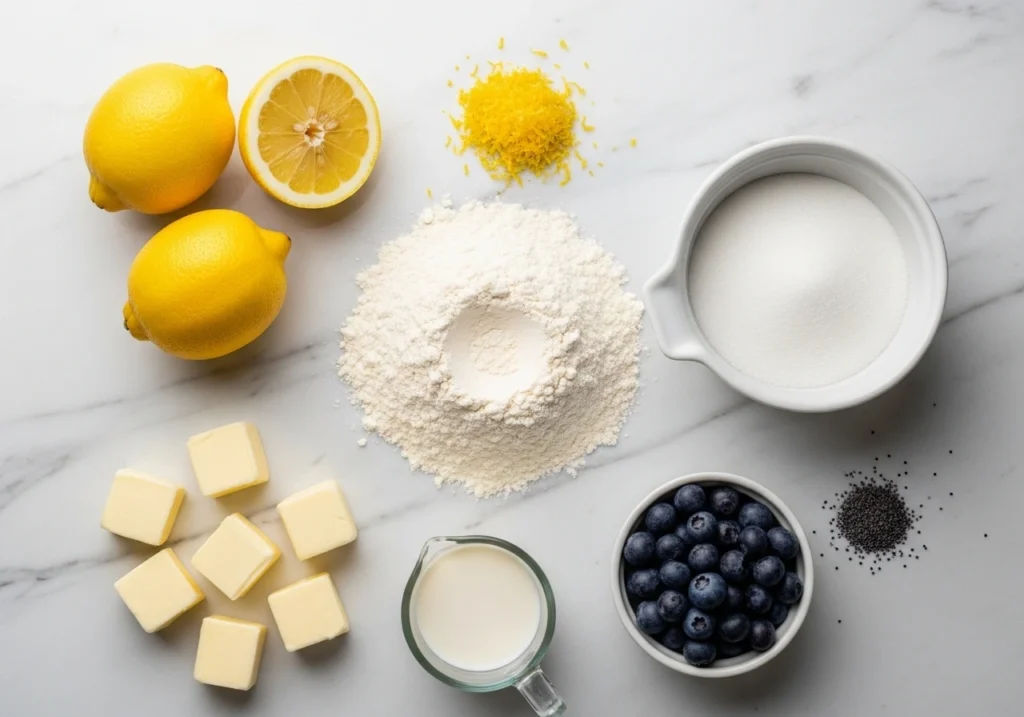
Let’s be honest: great baking starts with quality ingredients. Here is what you’ll need and why each item matters.
| Ingredient | Amount (for ~8 scones) | Why it matters |
|---|---|---|
| All-purpose flour | 2 cups (250 g) | Structure — the foundation of the scone. |
| Baking powder | 1 tbsp | Leavening — creates the rise and lightness. |
| Granulated sugar | 1/4 – 1/3 cup | Sweetness and slight caramelization on the crust. |
| Salt | 1/2 tsp | Balances sweetness and enhances flavors. |
| Unsalted cold butter | 1/2 cup (115 g), cubed | Fat for flakiness and richness. Cold is crucial. |
| Heavy cream (or buttermilk) | 3/4 cup + 2 tbsp | Moisture and tenderness; buttermilk adds tang. |
| Fresh lemon zest | 2 tbsp | The concentrated lemon oils — the flavor powerhouse. |
| Fresh lemon juice | 2 tbsp | Adds brightness and acid to balance richness. |
| Egg (optional, for richer dough) | 1 large | Adds structure and color (optional). |
| Blueberries (optional) | 3/4 cup | For lemon blueberry scones or blueberry lemon scones. |
| Poppy seeds (optional) | 2 tbsp | For lemon poppy seed scones. |
| Powdered sugar (for glaze) | 1 cup | For a simple lemon glaze. |
Note: If you want these dairy-free or lighter, you can swap heavy cream for full-fat yogurt or a plant-based cream substitute, but the texture will shift slightly. For a tart-buttery twist, use buttermilk instead of cream.
Kitchen Tools You’ll Need
Good tools don’t make you a baker, but they make the process smoother and improve results. Here’s what I recommend.
| Tool | Purpose |
|---|---|
| Mixing bowls (large & medium) | Mixing dry and wet ingredients separately. |
| Pastry cutter (or two knives) | To cut cold butter into flour — key for flakiness. |
| Measuring cups & spoons | Accuracy for consistent results. |
| Baking sheet & parchment paper | For even baking and easy cleanup. |
| Cooling rack | To prevent soggy bottoms and allow cooling. |
| Zester | To capture those aromatic lemon oils. |
| Bench scraper (optional) | Helps lift and shape the dough. |
A food processor can speed up the process — pulse the butter into the dry ingredients — but I like the tactile control of a pastry cutter. The key is to keep the butter cold and the dough minimal-handled.
Step-by-Step Lemon Scones Recipe Instructions
Ready to get hands-on? Here’s the step-by-step. Read through once, then follow along. Baking rewards patience and a little precision.
1. Preheat and prep
Preheat your oven to 425°F (220°C). Line a baking sheet with parchment paper. Work on a cool surface; if your kitchen is warm, briefly chill the butter before you start.
2. Mix dry ingredients
In a large bowl, whisk together 2 cups of all-purpose flour, 1 tablespoon baking powder, 1/4–1/3 cup granulated sugar, and 1/2 teaspoon salt. Whisking aerates the flour and evenly distributes the leavening — a small step that pays off.
3. Cut in the butter
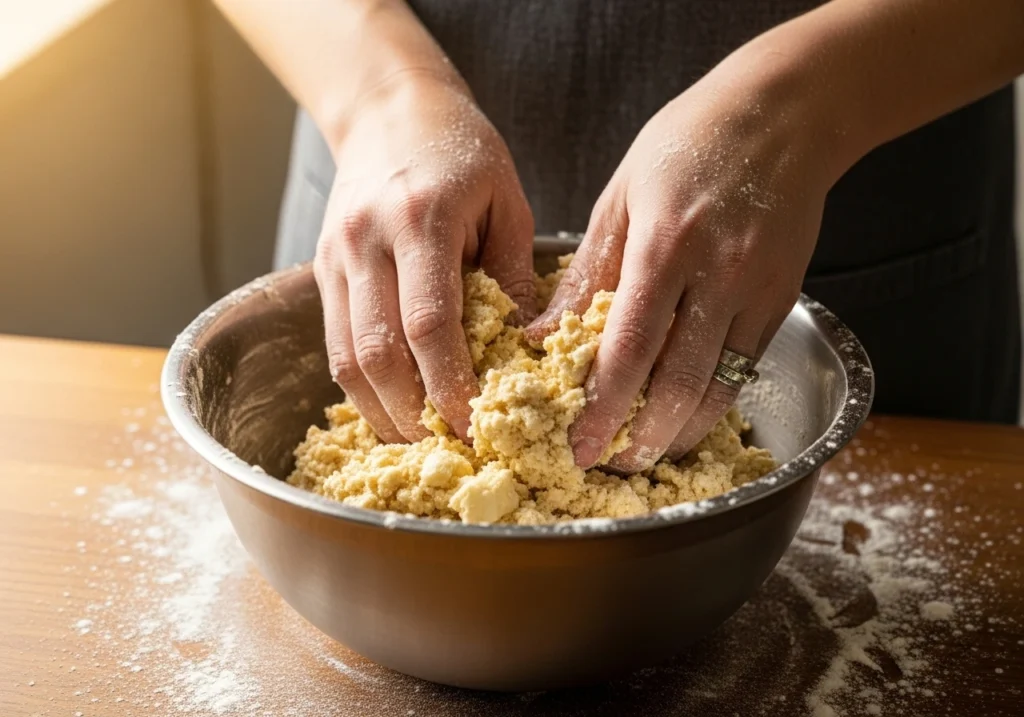
Add the cold, cubed unsalted butter (about 1/2 cup). Use a pastry cutter, two knives, or pulse briefly in a food processor. The goal is pea-sized pieces of butter coated in flour. These bits of butter will steam in the oven and create those flaky layers. Don’t overdo it — a few larger bits are good.
4. Add lemon zest and optional mix-ins
Stir in 2 tablespoons fresh lemon zest into the dry mix so the zest is distributed around the dough. If you’re making lemon poppy seed scones, add 2 tablespoons poppy seeds now. For lemon blueberry scones, don’t add blueberries yet if they’re frozen — see the note below.
5. Combine wet ingredients
In a separate bowl, whisk together 3/4 cup heavy cream (or buttermilk), 2 tablespoons fresh lemon juice, and 1 large beaten egg if using. If you prefer sweeter scones, add a teaspoon of vanilla extract. The lemon juice adds just the right tang and works with the lemon zest to give a bright citrus profile.
6. Bring the dough together
Make a well in the center of the dry ingredients, pour in the cream mixture, and gently fold with a spatula until the dough just comes together. If the dough looks dry, add another tablespoon of cream. Resist the urge to overmix — overworking develops gluten and yields tough scones.
7. Add berries carefully (if using)
If you’re making lemon blueberry scones or blueberry lemon scones, gently fold in about 3/4 cup fresh blueberries. If using frozen berries, coat them lightly in a tablespoon of flour before folding in; that prevents them from bleeding into the dough and turning everything purple.
8. Shape and cut
Turn the dough onto a lightly floured surface and shape it into a rough circle about 1-inch thick. Use a bench scraper or knife to gently flatten and even out the edges. Cut into 8 wedges (like a pie) or use a 2.5-inch round cutter for classic rounds. Place scones on the baking sheet, leaving a little space between each to allow for spread.
9. Brush and bake
For a glossy finish, brush the tops with a few teaspoons of cream or a beaten egg. Bake at 425°F (220°C) for 12–15 minutes until golden brown on top and a toothpick inserted into the center comes out clean. Watch them carefully — ovens vary. The tops should be a soft golden color, not dark brown — that preserves the tender crumb.
10. Lemon glaze (optional)
While the scones cool for a few minutes on a rack, whisk 1 cup powdered sugar with 1–2 tablespoons of fresh lemon juice (add a splash of cream if you want a thicker glaze) until smooth. Drizzle or spread over warm scones for a shiny, sweet lemon finish.
Troubleshooting During Baking — Quick Fixes
What if your scones spread too much, seem dense, or turn out dry? Here are quick, practical fixes.
- Too flat? Your butter melted before baking; next time, chill the dough briefly before cutting and baking, and ensure the oven is fully preheated.
- Dense or gummy crumb? Likely overmixing. Mix only until the dough comes together; a few streaks of flour are okay.
- Dry scones? Slightly reduce flour or add an extra tablespoon of cream next time. Also, don’t overbake — remove when they are just set and lightly golden.
Delicious Variations: Lemon Blueberry Scones & More
One of the best things about a simple lemon scones recipe is that it becomes a springboard for new, exciting variations. Once you’ve mastered the basic dough from Part 1, you can easily turn it into lemon blueberry scones, blueberry lemon scones, or lemon poppy seed scones without starting from scratch. Each variation adds its own personality — blueberries bring bursts of sweetness, poppy seeds add a subtle crunch and nuttiness, and glaze variations help you customize the sweetness level.
Lemon Blueberry Scones
If you’ve ever had a lemon blueberry muffin and loved the balance between tangy and sweet, lemon blueberry scones are going to be your next obsession. These scones offer that tender, flaky structure with pockets of juicy berries.
To make them, simply follow the base dough recipe and fold in about 3/4 cup blueberries. If the berries are fresh, add them gently to avoid crushing them. If they’re frozen, don’t thaw them—just toss them in 1 tablespoon of flour to keep their color from bleeding too quickly into the dough. When baked, the berries soften and burst slightly, creating tiny pools of blueberry flavor in every bite.
Blueberry Lemon Scones
You might be wondering: are blueberry lemon scones any different from lemon blueberry scones? In most kitchens, the terms are interchangeable, but the subtle difference lies in the balance of flavors. Lemon blueberry scones lean more into the lemon-forward profile with blueberries as an accent. Blueberry lemon scones, by comparison, use more blueberries and more berry-forward flavor with just enough lemon to brighten the pastry.
If you want blueberry lemon scones, simply increase the blueberries to 1 cup and keep the lemon zest the same. You’ll get a richer, fruitier scone with a stunning, rustic appearance.
Lemon Poppy Seed Scones
For those who love lemon poppy seed muffins or lemon poppy seed bread, this variation is unmistakably satisfying. The tiny poppy seeds add the most delightful crunch and a mild nutty flavor that pairs beautifully with the lemon.
All you do is stir 2 tablespoons of poppy seeds into the dry ingredients before you add the cream. The seeds distribute evenly and add texture without distracting from the bright lemon flavor. Finish these with a lemon glaze, and you’ll have a pastry that looks elegant and tastes like something from a bakery display.
Glazed or Unglazed?
Some people prefer their scones glazed for a shiny, sweet finish. Others enjoy the natural crust of an unglazed scone. The base lemon glaze made with powdered sugar and lemon juice is the perfect topping for bringing the lemon flavor into crystal clarity. Unglazed scones, however, let you fully enjoy the buttery, flaky texture of the pastry without the sweetness of a topping. It really comes down to preference — and there’s no wrong choice here.
Expert Tips for the Fluffiest, Flakiest Results
Every great baker has a handful of tricks they rely on to get predictable, bakery-style bakes at home. Here are the ones I trust every time I make lemon scones or any of the variations.
Keep Your Butter Ice Cold
The colder the butter, the flakier the scones. Cold butter releases steam when it hits the oven, which creates pockets and layers. If your butter starts to soften while mixing, pop the bowl in the fridge for five minutes. It’s truly the difference between a cakey scone and a layered, tender one.
Don’t Overmix the Dough
The biggest mistake people make is overworking the dough. Once you add the wet ingredients, fold everything together until just combined. A few streaks of flour are perfectly fine. Overmixing develops gluten, which leads to tough, dense scones. Think of the dough like a soft cloud — handle it gently.
Choose the Best Blueberries
If you’re making lemon blueberry scones or blueberry lemon scones, choose firm, plump blueberries. If they’re too soft, they will crush easily, turning your dough gray or purple. Frozen berries work fine — just remember not to thaw them. A light dusting of flour helps them stay suspended in the dough.
Get the Oven Temperature Right
Scones thrive in a hot oven. The quick blast of heat helps them rise tall and set fast, creating that crisp exterior while keeping the inside tender. Always preheat your oven and avoid opening the door in the middle of baking.
Serving Suggestions for Homemade Lemon Scones
Now that your scones are fresh out of the oven, let’s talk about how to enjoy them at their best. Lemon scones pair beautifully with breakfast spreads, afternoon snacks, and even elegant gatherings.
Best Toppings for Lemon Scones
Popular toppings include clotted cream, soft butter, lemon curd, or a simple glaze. Lemon curd enhances the citrus flavor of the scones, while butter adds pure richness. A plain scone is wonderful on its own, but if you really want a luxurious bite, try pairing it with whipped honey butter.
Pairing with Tea, Coffee, and Breakfast Dishes
Scones naturally fit into a morning routine — something about the warmth and richness feels comforting. Enjoy your lemon scones with a cup of black tea, herbal tea, Caramel Frappuccino, or even a latte. They also pair beautifully with scrambled eggs, fruit bowls, and yogurt parfaits.
Serving Lemon Blueberry Scones for Special Occasions
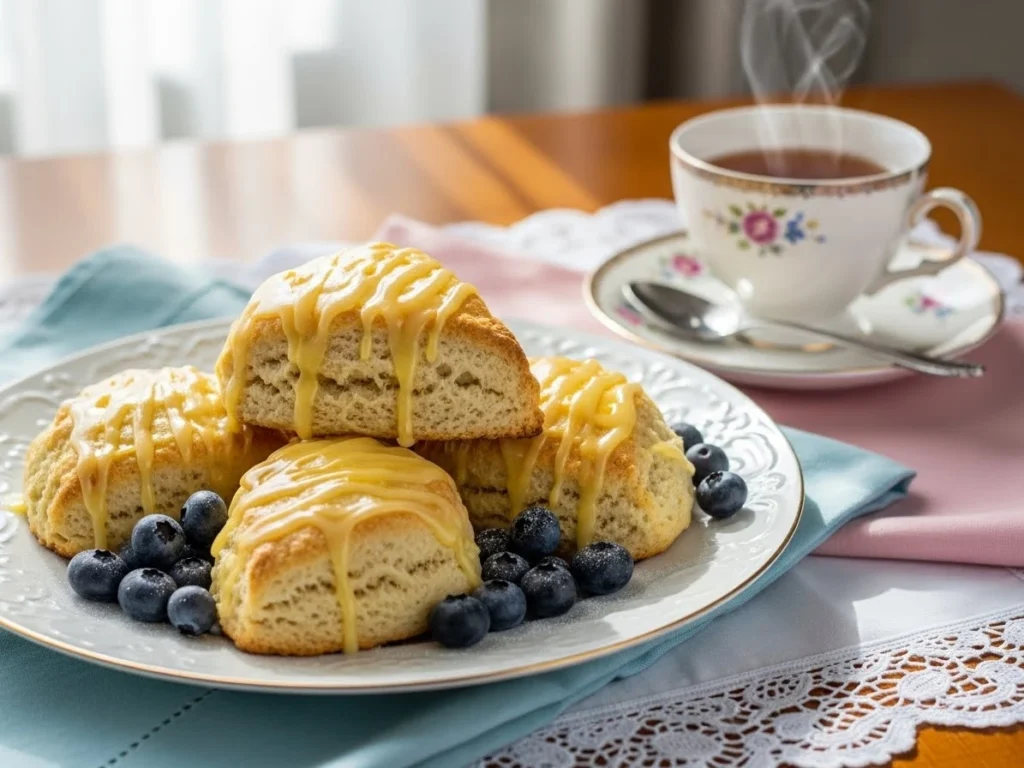
If you’re baking for a brunch gathering, lemon blueberry scones grace the table like a homemade masterpiece. Their natural blueberry bursts and the bright lemon glaze make them look like something from a boutique bakery. Serve them on a vintage platter for added charm.
Presentation Tips for Guests
Simple touches go a long way — place the scones on a wooden board or linen-lined tray, drizzle extra glaze before serving, or dust lightly with powdered sugar. A small bowl of fresh blueberries or edible flowers around the plate instantly elevates the look.
Storage, Freezing & Reheating Tips
Fresh scones are incredible, but they also store surprisingly well. Here’s how to keep yours tasting great long after they’re baked.
How to Store Lemon Scones for Freshness
Store them in an airtight container at room temperature for up to two days. They will retain their soft crumb and light crust. If you’ve glazed them, keep parchment between layers to prevent sticking.
Freezing Lemon Scones (With or Without Glaze)
Scones freeze beautifully. Cool them completely, then freeze unglazed scones in a freezer-safe bag for up to three months. If you prefer to freeze the dough instead, shape the scones and place them on a tray in the freezer until solid. Transfer to a bag and bake from frozen at 425°F, adding a couple extra minutes to the bake time.
Reheating for a Freshly-Baked Texture
Pop your scone in a 350°F oven for five minutes to restore its crisp exterior. Microwaving is quick but softens the texture, so it’s best reserved for scones you plan to eat immediately.
Making Ahead for Busy Mornings
You can prepare the dough the night before, shape it, and refrigerate until morning. Bake it fresh, and your kitchen will smell like a bakery — it’s a morning luxury worth trying.
FAQs About Lemon Scones & Citrus Pastries
Can I substitute milk for cream?
You can, but the texture changes. Cream gives richness and moisture that milk doesn’t fully replicate. If using milk, chill the dough longer and reduce mixing to maintain tenderness.
Why did my scones turn out dry?
Dry scones usually mean too much flour or overbaking. Try reducing the flour slightly, adding a bit more cream, or baking for a shorter time.
Can I make these gluten-free or vegan?
Absolutely. For gluten-free, use a 1-to-1 gluten-free flour blend. For vegan scones, swap the butter for cold vegan butter and use coconut cream or oat cream instead of heavy cream.
Do lemon poppy seed scones need a glaze?
Not necessarily. They’re delicious plain, but the glaze adds a shiny lemon sweetness that makes them feel more indulgent.
Your New Favorite Lemon Scones Recipe
There you have it — everything you need to master lemon scones, lemon blueberry scones, blueberry lemon scones, and lemon poppy seed scones from scratch. Whether you crave a bright citrus pastry or a fruit-packed breakfast treat, this recipe gives you the flexibility to experiment and enjoy. With cold butter, gentle mixing, and just the right amount of lemon, you’ll get bakery-style results every time.
If you’d like, I can also write the meta description, Pinterest pin descriptions, a Facebook post version, or a printable recipe card.
The Best Lemon Scones Recipe for Stunning, Zesty Flavor
Ingredients
Scones
- 2 cups all-purpose flour
- 1/3 cup granulated sugar
- 1 tbsp lemon zest fresh, finely grated
- 1 tbsp baking powder
- 1/2 tsp fine salt
- 1/2 cup cold unsalted butter cubed
- 2/3 cup heavy cream cold
- 1 large egg
- 2 tbsp lemon juice freshly squeezed
- 1 tsp vanilla extract
Optional Mix-Ins
- 1 cup fresh blueberries for lemon blueberry scones or blueberry lemon scones
- 1 tbsp poppy seeds for lemon poppy seed scones
Lemon Glaze
- 1 cup powdered sugar
- 2 –3 tbsp lemon juice
- 1 tsp lemon zest
Instructions
How to Make the Scones
- Preheat your oven to 400°F (200°C) and line a baking sheet with parchment paper.
- In a large bowl, whisk together the flour, sugar, lemon zest, baking powder, and salt.
- Add the cold cubed butter and cut it into the dry ingredients using a pastry cutter or your fingertips until the mixture resembles coarse crumbs.
- In a separate bowl, whisk the heavy cream, egg, lemon juice, and vanilla extract.
- Pour the wet mixture into the dry mixture and stir gently until just combined (do not overmix).
- If using mix-ins like blueberries or poppy seeds, fold them in gently.
- Transfer the dough onto a lightly floured surface and shape into an 8-inch round disc about 1 inch thick.
- Cut into 8 wedges and place them onto the prepared baking sheet.
- Brush the tops with a little heavy cream for a golden finish.
- Bake for 16–18 minutes or until golden at the edges.
- Cool on a wire rack before glazing.
Make the Lemon Glaze
- Whisk the powdered sugar, lemon juice, and zest until smooth.
- Drizzle over cooled scones and let set for 5 minutes before serving.
Notes
- Keep butter and cream very cold for the flakiest texture.
- Avoid overworking the dough—this makes the scones tough.
- Fresh blueberries work best; frozen may bleed color but still work.
- Scones freeze well—store unglazed scones up to 2 months.
Review Our Recipe: Your Feedback Makes a Difference
There are no reviews yet. Be the first one to write one.